Apollo.io Review for Small Sales Teams: The All-in-One Prospecting Platform That Actually Delivers (2026)
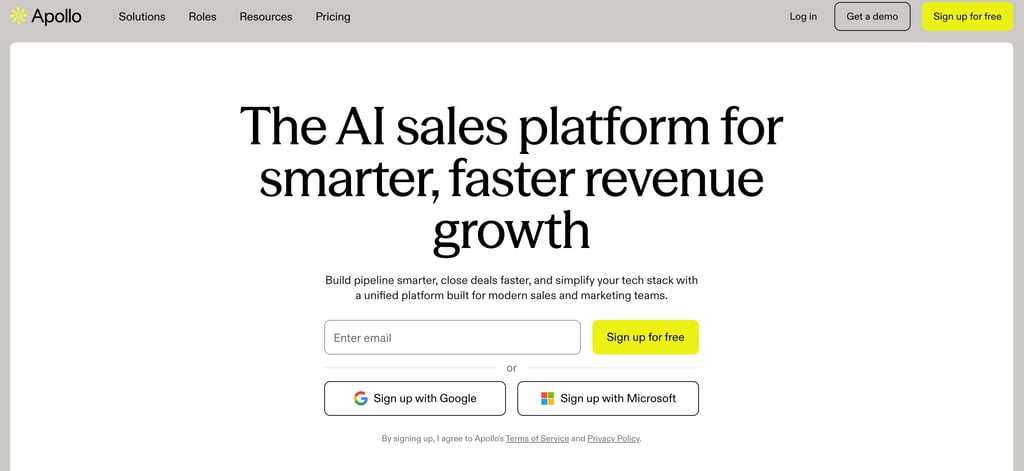
Apollo.io combines a 230M+ contact database, email sequences, a dialer, and AI research in one platform. Here's the honest 2026 breakdown for small B2B sales teams, including the credit system trap most reviews skip.
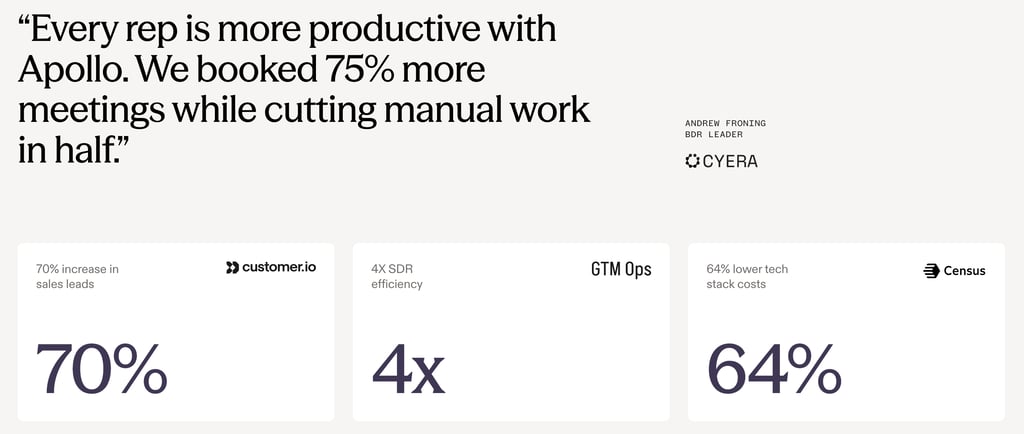
If your sales team is currently paying separately for a contact database, an email sequencer, a dialer, and a CRM enrichment tool, Apollo.io is probably the most direct way to consolidate all of that into one platform and significantly reduce your tech stack costs. Multiple G2 reviewers cite savings of 60% or more after switching to Apollo from a combination of separate tools.
That consolidation value is real, and it's the core reason Apollo has become one of the most widely used sales platforms for small B2B teams in 2026, with a 4.7/5 score across 9,400+ reviews. But the credit system catches teams off guard more than any other single issue, and understanding it before you build your outbound workflow saves real money and frustration. Here's the full picture.
What It Does That Small Teams Actually Use
Find verified contacts at scale: Apollo's contact database gives you full access, 2 active sequences, Chrome extension, and AI assistant access even on the free tier, one of the best free tiers in B2B SaaS. On paid plans, you get advanced filters to build targeted lists by industry, company size, job title, technology stack, and buying intent signals, narrowing 230M+ contacts down to exactly the profile you're targeting.
Build and run email sequences without a separate tool: Most small teams patch together a contact database with a separate sequencer. Apollo does both: you find the contact, verify the email, and add them to an outreach sequence in the same platform. Building a targeted list that used to take half a day now takes roughly 20 minutes, according to a verified G2 reviewer.
AI-assisted research and writing: Apollo's AI Assistant, launched in March 2026, helps draft cold email sequences, personalize outreach based on prospect data, and summarize call recordings. It functions as a strong drafting and research co-pilot: it drafts, you approve, you launch. It's a productivity tool rather than a fully autonomous SDR replacement, which is the right expectation to set.
Pre-meeting intelligence: Before a call, Apollo surfaces company background, recent news, decision-maker profiles, and suggested talking points automatically. For a small team where every rep wears multiple hats, walking into a meeting prepared without 30 minutes of manual research matters.
Built-in dialer and call recording: Available on Professional and above, the dialer records calls and generates AI summaries and action items automatically, replacing a separate call recording subscription for most small teams.
Try Apollo.io free, no credit card required.
The Credit System: What You Need to Understand Before You Build Anything
This is the section most Apollo reviews gloss over, and it's the most important thing for a small team to understand before committing to a plan.
Apollo charges credits for most meaningful actions: exporting contacts, enriching data, accessing mobile numbers, and using certain AI features. Credits don't roll over; unused credits expire at the end of each month. If you have 4,000 credits on a Professional plan and only use 2,000 in March, the remaining 2,000 disappear on April 1st. That's the most consistent complaint across verified user reviews.
Most teams spend 30–50% more than the base plan price once credit overages are factored in. Budget $80–150/user/month for active outbound use rather than the headline plan price.
The practical implication for a small team: don't export contacts before confirming fit. Reveal contact details only when you're ready to actually reach out to teams that treat Apollo as a bulk data export tool and burn through credits fast. Teams that use it as an intent-driven prospecting layer keep costs predictable.
Verified 2026 pricing:
Free: 100 credits/month, 2 active sequences, Gmail only, Chrome extension. Genuinely useful for early-stage founders and solo users but becomes limiting quickly due to export caps and the 2-sequence ceiling.
Basic: $49/user/month, billed annually. Unlimited email sequences, A/B testing, job change alerts, all email providers. Right for teams starting to scale outbound.
Professional: $79/user/month, billed annually. Adds call recording, advanced analytics, higher credit limits, international dialer. The realistic plan for an active sales team.
Organization: $119/user/month, billed annually, 3-user minimum ($357/month minimum). Adds SSO, advanced permissions, and custom data fields. For teams with compliance or security requirements.
One additional cost to factor in before signing: annual contracts often include price escalation clauses of 5–10%. Worth reviewing before you sign. And if someone leaves your team mid-contract, you're still paying for their seat for the remainder of the term.
Where the Data Has Real Limitations
Apollo claims high email accuracy rates, but real-world user reports across G2, Capterra, and Reddit suggest bounce rates of 15–35% depending on geography and industry. One G2 reviewer noted that after debouncing, 40–45% of exported data was deleted as unverifiable.
The practical implication: always verify emails before sending, especially in non-US markets where international coverage is notably weaker. Apollo's built-in email warmup and deliverability suite helps protect sender reputation, but it doesn't fully compensate for data quality gaps at the contact level. Customer service scores the lowest of Apollo's rated sub-categories at G2, which matters if you hit a data quality issue and need fast resolution.
For teams where data accuracy is the primary requirement, particularly in niche industries or international markets, a dedicated email verification tool alongside Apollo may be worth the added cost.
Who It's Right For
Apollo's pricing is best suited for small businesses and individual sales professionals seeking an affordable all-in-one outbound platform. For a 2–5-person B2B sales team doing outbound prospecting, the consolidation value is hard to argue with: you're replacing multiple tool subscriptions with one platform that handles the entire workflow from list building to conversation intelligence.
It's a stronger fit if your team does high-volume outbound in the US or English-speaking markets, values workflow consolidation over best-in-class performance on any single feature, and can invest time in learning the credit system before scaling.
It's a weaker fit if data accuracy is critical and you're primarily targeting non-US markets, if your team needs true autonomous AI outreach (Apollo assists, it doesn't replace human approval steps), or if headcount makes per-seat pricing unsustainable at scale.
The free tier is genuinely the right starting point to test the data quality against your specific ICP before committing to an annual plan. Run 50 contacts through the system, check the live-valid email rate, and make the paid plan decision based on actual results rather than database size claims.
Start prospecting for free with Apollo.io.